Waterfront Homes
Why are so many Belleair Beach homes newer, and what does that mean for buyers?
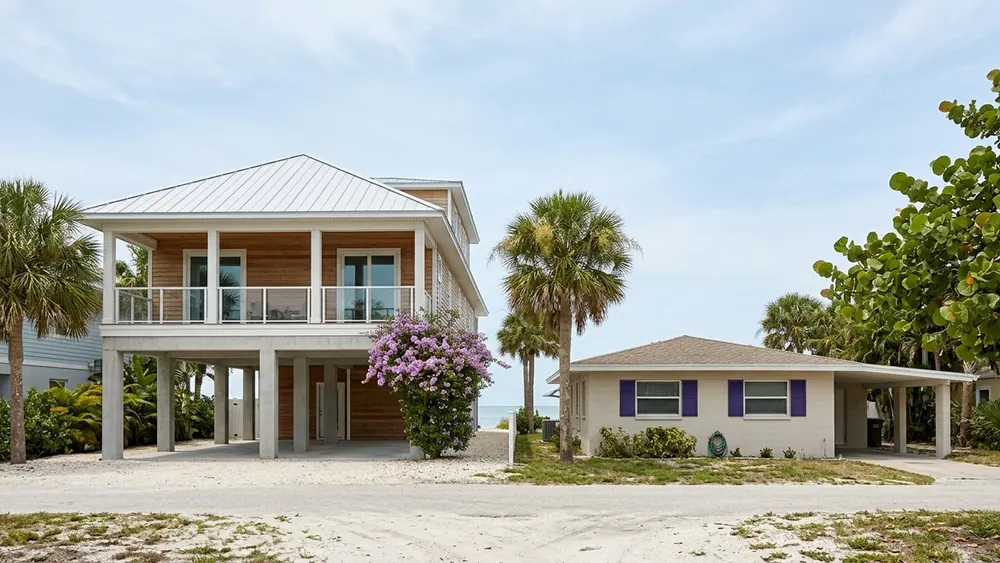
Many Belleair Beach homes are newer because older island homes have been replaced over time, often with elevated construction. For buyers, it means asking about construction, the elevation certificate, the flood zone and insurance on every home, new or old.
On this page
- The short answer about newer island homes
- What newer construction does and does not settle
- Questions to ask about any island home
- How an island home compares with the mainland
- Assumptions that catch island buyers out
- Who confirms each answer for you
- Fitting the plan to the home you find
- What to bring to a first conversation
The short answer about newer island homes
Belleair Beach sits on a barrier island between the Gulf and the Intracoastal, and over time many of its older homes have been replaced. Newer homes there are often built elevated, so buyers see newer construction standing beside older homes on the same street. For a buyer, the age of a home matters less than what it means: each kind of home comes with its own set of questions.
Why a particular home was replaced is its own story, and it is not something to guess at. Owners rebuild for many reasons, and building rules for homes on a barrier island are part of the picture. The city and the permitting office hold the records for a specific property, and they are the right place to ask what was built, when, and under which approvals.
This matters because a newer home and an older home can look similar in a listing and raise very different questions in practice. An elevated newer home may come with recent permits and an elevation certificate. An older home may come with fewer records and more open questions. Knowing which one you are looking at tells you where to start, and which professionals to call first.
What newer construction does and does not settle
A newer, elevated home answers some questions and leaves others open. It does not settle the flood zone, which comes from FEMA flood maps and can change. It does not settle insurance, which an insurance agent quotes for that specific home. And it does not mean every part of the home was built or inspected the way you assume. Newer is a starting point, not a conclusion.
The same is true in reverse for an older island home. It is not automatically a problem, and it is not automatically a teardown. It may have been updated carefully, or it may not have been. A home inspector can tell you about its current condition, and the city can tell you what permit records exist. Either way, the questions are concrete and they have answers.
I tell island buyers the same thing about new and old homes. Ask for the elevation certificate, the flood zone and the construction details before you make an offer, not after.
Questions to ask about any island home
Start with construction. Ask how and when the home was built, whether major work was done later, and whether permits exist for that work. For a newer home, ask for the permit history and any warranties the seller can pass along. For an older home, ask what has been replaced and what is original. The city and the permitting office can confirm what the seller tells you.
Next, the elevation certificate. This is a document, usually prepared by a surveyor, that records how a building sits in relation to flood levels shown on the flood maps. Not every home has one. If the seller has it, ask for a copy early. If not, ask a surveyor what producing one involves, and ask your insurance agent how the certificate, or the lack of one, affects their quote.
Then the flood zone and insurance. Look the property up on FEMA flood maps and ask Pinellas County and the city about anything you do not understand. Get quotes from an insurance agent before you are deep into a purchase, not after you are under contract with deadlines approaching. No one can tell you in advance what a quote will be, so ask for one on the actual home.
How an island home compares with the mainland
A barrier-island home on Belleair Beach and a mainland home in Dunedin, Palm Harbor, Clearwater, Safety Harbor or Largo raise different sets of questions. The island home has open water on both sides, so buyers usually put flood, construction and insurance questions at the top of the list. A mainland home near downtown Safety Harbor or Lake Tarpon may raise some of the same questions or very few of them, depending on where it sits.
This is not a ranking, and neither setting wins. It is a way to sort your search by what the property is and where it sits, so you bring the right questions to each home. Some buyers look at both island and mainland homes before deciding which set of questions they would rather take on, and that comparison is worth doing early in a search, before you fall for one house.
Assumptions that catch island buyers out
A few assumptions come up again and again with barrier-island homes. Each one sounds reasonable, and each one can leave a buyer surprised late in a purchase, when there is little room left to ask questions. None of them is a reason to avoid an island home. They are simply reasons to check the paperwork before you commit to anything.
- Assuming a newer home has no flood or insurance questions worth asking
- Assuming an older home will be simple to renovate or rebuild later
- Assuming the neighboring home’s flood zone or insurance quote applies to yours
- Assuming permits exist for every addition or change you can see
Every one of these assumptions is answered by a document or a professional. The insurance agent answers quotes, the city and the permitting office answer permit history, FEMA flood maps answer the zone and a surveyor answers elevation. Michael has represented a buyer on Belleair Beach, and keeping those questions in order, so each reaches the right person, is the real estate side of the job.
Who confirms each answer for you
When you are looking at an island home, it helps to know in advance who gives the official answer to each question. The listing and the seller can point you in a direction, but the confirmation comes from the right office or professional. The table below sorts the main questions by why they matter and who confirms the answer.
| Question | Why it matters | Who confirms |
|---|---|---|
| What is the flood zone? | It shapes insurance and building questions | FEMA flood maps and Pinellas County |
| Is there an elevation certificate? | Insurance agents often ask to see one | The seller, or a surveyor |
| What work was permitted, and when? | Unpermitted work can surface late in a sale | The city and the permitting office |
| What will insurance cost? | Quotes vary by home and coverage | An insurance agent |
| What condition is the home in? | Age alone does not tell you | A home inspector |
Keep this table with your notes as you look at homes. When a seller or a listing makes a claim about any of these items, write down who confirmed it. If nobody has, add it to your list of questions. That habit is especially useful on a barrier island, because so many decisions rest on paperwork you cannot see from the street.
Fitting the plan to the home you find
Fit the plan to the property. If you find a newer elevated home, your focus is confirming what it is: the permits, the certificate, the flood zone and the quotes. If you find an older home, your focus widens to condition and to whether you would keep it, renovate it or eventually rebuild, which brings in an inspector, a contractor and questions for the city.
Some island buyers plan to buy an older home and rebuild. That path has its own set of questions about the lot, the survey and what a new home would need, and none of them can be answered from a listing. The city and the permitting office are where those answers start, and a contractor can talk through what the work would involve before you make an offer.
What to bring to a first conversation
Before you start touring, write down what you are looking for: newer or older, move-in ready or willing to take on work, island or mainland. Note your timing and whether you are selling another home first. Then list the questions from this article you most want answered for each home. That list will do more for your search than a long list of features.
If you are weighing a home on Belleair Beach and want help sorting the questions, bring your list to Michael. Start with what kind of home you want and how much of the checking you are ready to take on, and the plan can follow from there. Which matters more to you right now: a newer home with more records, or an older one with more open questions?
This article is general information about buying and selling property in Pinellas County, Florida. It is not legal, tax, insurance, lending, survey or inspection advice and does not predict prices or promise results. Confirm flood zones with FEMA flood maps and Pinellas County, title and submerged land with a title company and surveyor, coverage with an insurance agent, zoning and permits with the city and county, property tax with the Pinellas County Property Appraiser, and financing with a lender. Michael Meoni, Charles Rutenberg Realty. Equal Housing Opportunity.

Written by