Waterfront Homes
What does submerged land mean on a Dunedin waterfront listing, and who confirms it?
The short answer
Submerged land is the ground under the water beside a waterfront lot. On a Pinellas County listing it raises one question, where the property ends, and a title company, a surveyor and a real estate attorney confirm the answer.
On this page
The plain answer about submerged land
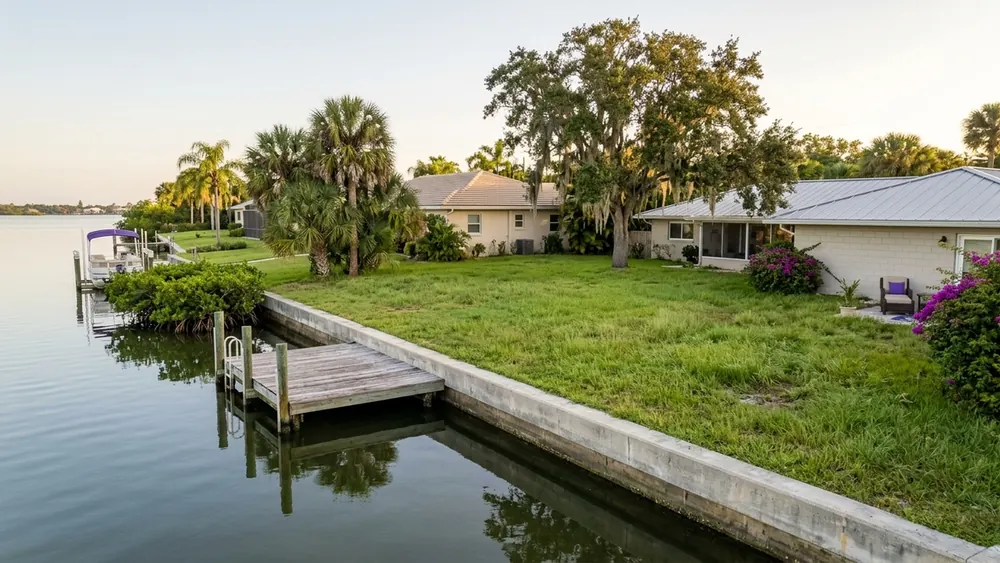
Submerged land is the ground under the water beside a waterfront property. When the term shows up on a waterfront listing in Dunedin, Clearwater or elsewhere in Pinellas County or in a set of documents, it points at one question: where does the property end, and what rights come with the water side of it? The answer is not on the listing, and it is not something a buyer or seller should assume. A title company, a surveyor and, where needed, a real estate attorney confirm it from the deed, the survey and the public record.
That matters because a waterfront home is usually bought for the water as much as the house. The dock, the boat lift, the seawall and the view across St. Joseph Sound or the Intracoastal all sit at the edge of the lot. If the boundary or the rights at that edge are unclear, the most important part of the purchase is the part nobody has checked. Finding that out late leaves very little room to ask good questions, and even less room to get clear answers before your deadlines arrive.
Sellers have the same interest. A seller who gathers the survey and any submerged land documents before listing can answer buyer questions plainly, instead of waiting for them to surface in the middle of a contract. Michael has handled the sale of a large Intracoastal property, and waterfront questions like this one tend to come up early. Having the paperwork ready keeps the conversation about the property, not about missing records.
Why the term appears on waterfront paperwork
The term shows up because a waterfront lot does not stop neatly at the back of the house. Somewhere between the yard and open water there is a line, and each set of documents describes it in its own way. Some records describe structures that extend over the water. Some mention leases, easements or permits tied to the water side. The wording varies from property to property, so the sensible move is to read it as a prompt for questions, not a conclusion.
- Where the survey shows the property line meeting the water or the seawall
- Whether any document describes land under the water as part of the parcel
- Whether a dock, boat lift or other structure extends out over the water
- Whether any lease, easement or permit is tied to the water side of the lot
The documents to request before you commit
Before you are deep into a purchase, ask for the paperwork that describes the water edge. Not every property will have every item, and that is useful to know too. A missing document is a question, not an answer. Gather what exists, note what does not, and put all of it in front of the professionals who can read it properly and tell you what it means for this particular lot. Keep copies of everything in one folder, so each professional sees the same set of records you do.
- A current survey that shows the water boundary and every structure near it
- The deed and legal description, as reported by the title company
- Any submerged land lease, easement or related document the seller holds
- Records for the dock, lift and seawall, including any permits on file
- The parcel record from the Pinellas County Property Appraiser
Who answers each part of the question
The title company looks at the deed, the legal description and the public record, and reports what the record shows about ownership and anything recorded against the property. That includes items tied to the water side when they have been recorded. Ask the title company directly whether anything in the record touches the land under the water. Ask early, so the answer arrives before your inspection and financing deadlines, not after them.
The surveyor shows where the boundary actually sits on the ground and where structures sit in relation to it. A dock or seawall that crosses a line on the survey is exactly the kind of detail a surveyor catches. If the existing survey is old or does not show the water edge clearly, ask whether a new one makes sense. The surveyor, not the listing and not the seller’s memory, is the source for where the lot ends.
When the documents raise a question about rights or ownership, a real estate attorney can explain what they mean for your situation. Questions about dock and seawall permits go to the city where the property sits and Pinellas County. Official Florida sources cover the state’s role in submerged land in general terms, and the attorney or title company can point you to the right one. On the real estate side, the job is keeping these questions in order and making sure each one reaches the right person.
Assumptions that cause surprises at the water
The most common assumption is that the dock comes with the house in every sense. Sometimes the structure, the land under it and the right to use it are covered by different documents, and a buyer only learns that when someone reads them closely. Another assumption is that the seawall’s condition is somebody else’s concern. Ask a home inspector or a contractor who works on seawalls to look at it, and ask the city what records exist.
A third assumption is that two neighboring lots on the same stretch of water have the same answers. They often do not. One lot on Bayshore Blvd and the next one along the shoreline can have different surveys, different structures and different histories. The same is true of a barrier-island home on Belleair Beach compared with a home on the Intracoastal. Treat each property on its own record, and do not borrow conclusions from the house next door, even when the two look alike from the water.
I would rather you read the survey and the submerged land paperwork before you fall for the dock. The water edge is where waterfront questions start, so start there.
How the setting changes the questions
A home directly on the Intracoastal, a home on a canal or on the Sound, and a home a few blocks inland raise different questions. The inland home may have no water boundary at all, so submerged land never comes up. A home on the water will usually raise it in some form. Knowing which situation you are in tells you how much of this checklist applies before you even open the paperwork. For a condo or townhome near the water, the association documents may also describe shared docks or shoreline, so read those too.
Condition changes the picture too. A move-in ready waterfront home and an older one sold as-is both need the same boundary questions answered, but the older home may come with older records, older structures and fewer documents. As-is means the seller is not planning repairs before the sale. It does not change what the title company, the surveyor and the city need to see. If anything, it makes gathering the records early more useful.
What to gather before a first conversation
You do not need to understand every document to get started. Write down the property you are considering, what you know about the dock, lift and seawall, and any paperwork the listing or the seller has already shared. Note anything that looked unclear, such as a reference to a lease or a structure you could not match to the survey. That short list becomes the starting point for every professional you talk to, and it keeps you from asking the same question twice.
If you are selling, the same list works from the other side. Pull together your survey, your deed, any submerged land documents and the records for your dock and seawall. Check your parcel record with the Pinellas County Property Appraiser. If something is missing, find out now whether it exists, because buyers and their title companies will ask. Presenting what you have plainly is part of selling a waterfront home well.
If you are weighing a waterfront home in North Pinellas and the paperwork has you unsure where to begin, bring what you have to Michael. Start with what the property is and where it sits, then sort which questions go to the title company, the surveyor, the attorney and the city. Which document about your property’s water edge are you still missing?
This article is general information about buying and selling property in Pinellas County, Florida. It is not legal, tax, insurance, lending, survey or inspection advice and does not predict prices or promise results. Confirm flood zones with FEMA flood maps and Pinellas County, title and submerged land with a title company and surveyor, coverage with an insurance agent, zoning and permits with the city and county, property tax with the Pinellas County Property Appraiser, and financing with a lender. Michael Meoni, Charles Rutenberg Realty. Equal Housing Opportunity.

Written by